Low Sperm Count Explained: Understanding Semen Analysis Reports and Male Fertility
Male fertility plays a crucial role in conception, yet it often receives less attention than female reproductive health. According to global estimates, male factors contribute to nearly half of infertility cases among couples. One of the most common concerns affecting male fertility is low sperm count.
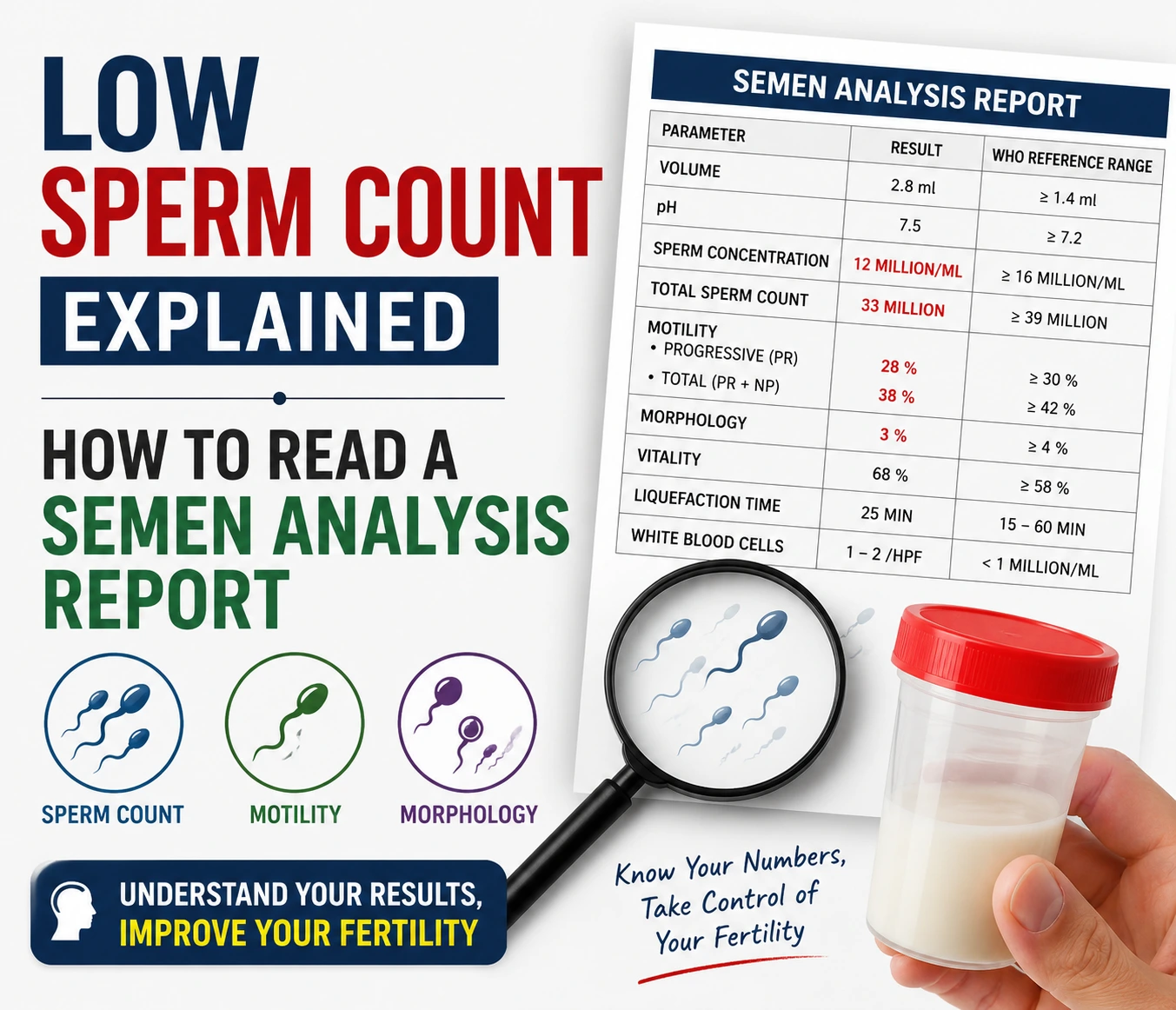
Many men discover fertility issues only after undergoing a semen analysis test. However, receiving a semen analysis report can be confusing because it contains several medical terms such as sperm concentration, motility, morphology, and semen volume. Understanding these parameters can help men make informed decisions and seek timely medical advice.
This article explains what low sperm count means, its causes, symptoms, and how to read and understand a semen analysis report.
What Is Low Sperm Count?
Low sperm count, medically known as oligospermia, refers to a condition in which semen contains fewer sperm than normal. A lower number of sperm reduces the chances of fertilizing an egg naturally, although pregnancy may still be possible.
According to the World Health Organization (WHO), a sperm concentration below 16 million sperm per milliliter is considered lower than the reference range.
Low sperm count can vary in severity:
-
Mild oligospermia: 10–15 million sperm/ml
-
Moderate oligospermia: 5–10 million sperm/ml
-
Severe oligospermia: Less than 5 million sperm/ml
-
Azoospermia: Complete absence of sperm in semen
Having a low sperm count does not necessarily mean infertility. Many men with reduced sperm numbers can still father children naturally or with medical assistance.
Symptoms of Low Sperm Count
In many cases, low sperm count causes no noticeable symptoms. Some men may experience:
-
Difficulty conceiving
-
Reduced sexual desire
-
Erectile dysfunction
-
Pain or swelling in the testicles
-
Decreased facial or body hair
-
Hormonal imbalances
-
Reduced semen volume
Often, infertility becomes the first sign that prompts further investigation.
Common Causes of Low Sperm Count
1. Varicocele
Varicocele refers to enlarged veins within the scrotum. It can raise testicular temperature and interfere with sperm production.
2. Hormonal Imbalances
Hormones produced by the brain and testes regulate sperm production. Problems involving testosterone, FSH, LH, or thyroid hormones can affect fertility.
3. Infections
Certain infections may damage sperm production or block sperm transport. These include:
-
Sexually transmitted infections
-
Epididymitis
-
Orchitis
4. Lifestyle Factors
Daily habits significantly influence sperm health. Risk factors include:
-
Smoking
-
Excessive alcohol consumption
-
Drug abuse
-
Lack of sleep
-
Chronic stress
-
Obesity
-
Sedentary lifestyle
5. Heat Exposure
Frequent exposure to high temperatures may temporarily reduce sperm production. Examples include:
-
Hot tubs
-
Sauna baths
-
Tight clothing
-
Prolonged laptop use on the lap
6. Medical Conditions
Certain health conditions can contribute to low sperm count:
-
Diabetes
-
Thyroid disorders
-
Autoimmune diseases
-
Genetic abnormalities
-
Previous surgeries
7. Environmental Toxins
Exposure to pesticides, heavy metals, industrial chemicals, and radiation may negatively affect sperm quality.
What Is a Semen Analysis Test?
A semen analysis is one of the most important laboratory tests used to evaluate male fertility. It assesses:
-
Sperm count
-
Semen volume
-
Motility
-
Morphology
-
Liquefaction time
-
pH
-
Presence of white blood cells
Doctors usually recommend semen analysis when couples are experiencing difficulty conceiving.
For accurate results, abstinence for 2–7 days before sample collection is generally advised.
How to Read a Semen Analysis Report
Receiving a laboratory report full of numbers can feel overwhelming. Understanding each parameter makes interpretation easier.
1. Semen Volume
Normal Range
1.4 ml or more
Semen volume refers to the amount of fluid ejaculated. Low volume may suggest:
-
Blockage of reproductive ducts
-
Hormonal abnormalities
-
Incomplete sample collection
Excessively high volume may dilute sperm concentration.
2. Sperm Concentration (Sperm Count)
Normal Range
16 million sperm/ml or higher
This measures the number of sperm present in each milliliter of semen.
Example:
If the report shows:
Sperm concentration = 40 million/ml
This falls within the normal reference range.
If concentration is:
8 million/ml
It indicates oligospermia (low sperm count).
3. Total Sperm Number
Normal Range
39 million or more per ejaculation
This value combines sperm concentration and semen volume.
Example:
Volume = 3 ml
Concentration = 20 million/ml
Total sperm count = 60 million
Total sperm count gives a broader picture of fertility potential.
4. Sperm Motility
Motility refers to the ability of sperm to move efficiently.
Normal Range
Total motility: 42% or higher
Progressive motility: 30% or higher
Good movement is essential because sperm must travel through the female reproductive tract to reach the egg.
Low motility is called asthenozoospermia.
Possible causes include:
-
Varicocele
-
Oxidative stress
-
Smoking
-
Infection
-
Nutritional deficiencies
5. Sperm Morphology
Morphology describes the shape and structure of sperm.
Normal Range
4% or more normal forms
Many sperm naturally have abnormal shapes. Even when morphology is lower, pregnancy can still occur.
Abnormal morphology may involve:
-
Head defects
-
Tail abnormalities
-
Midpiece defects
Poor morphology is known as teratozoospermia.
6. pH Value
Normal semen pH ranges from 7.2 to 8.0.
An abnormal pH may indicate:
-
Infection
-
Obstruction
-
Inflammation
7. Liquefaction Time
Fresh semen is initially thick and becomes liquid within 15–60 minutes.
Delayed liquefaction may interfere with sperm movement and fertility.
8. White Blood Cells
White blood cells should normally be very low.
Elevated levels may indicate:
-
Infection
-
Inflammation
-
Oxidative stress
Understanding Common Terms Found in Reports
Oligospermia
Low sperm count.
Asthenozoospermia
Reduced sperm motility.
Teratozoospermia
Abnormal sperm morphology.
Oligoasthenoteratozoospermia (OAT Syndrome)
Combination of low count, poor motility, and abnormal morphology.
Azoospermia
No sperm detected in semen.
Can One Abnormal Report Confirm Infertility?
No.
Sperm production naturally fluctuates over time. Fever, stress, illness, medications, or temporary lifestyle changes may influence results.
Doctors often recommend repeating the semen analysis after 2–3 months to confirm findings.
A single abnormal report does not necessarily mean permanent infertility.
Lifestyle Factors That Support Sperm Health
Although lifestyle changes cannot guarantee improved fertility, maintaining overall health may support normal reproductive function.
Maintain a Healthy Weight
Obesity is associated with hormonal changes that may affect sperm production.
Exercise Regularly
Moderate physical activity promotes metabolic health and hormone balance.
Get Adequate Sleep
Sleep deprivation may negatively affect testosterone levels.
Avoid Smoking and Excessive Alcohol
Both have been linked to impaired sperm quality.
Manage Stress
Chronic stress may influence hormonal pathways involved in reproduction.
Eat a Balanced Diet
A diet rich in fruits, vegetables, whole grains, nuts, and healthy fats provides antioxidants that help protect cells from oxidative stress.
When Should You See a Doctor?
Consult a healthcare professional if:
-
Pregnancy has not occurred after one year of regular unprotected intercourse.
-
You have a history of testicular injury or surgery.
-
You experience erectile dysfunction.
-
There is pain or swelling in the testicles.
-
Previous semen analysis reports were abnormal.
-
You have known hormonal disorders.
Early evaluation may help identify treatable causes.
Conclusion
Low sperm count is one of the most common factors affecting male fertility, but it does not automatically mean infertility. A semen analysis provides valuable information about sperm count, motility, morphology, and overall semen quality. Understanding these parameters can reduce anxiety and help men take appropriate steps toward diagnosis and treatment.
Since sperm quality can fluctuate naturally, a single report should not be considered the final answer. A comprehensive evaluation by a qualified healthcare professional remains the best approach for understanding male fertility and planning future treatment if necessary.
Frequently Asked Questions

Related Articles